The Premise
V for Vendetta unfolds in a near-future Britain that has surrendered itself to fear. After waves of war, plague, and manufactured chaos, the country is now ruled by Norsefire, a totalitarian party that has perfected the machinery of surveillance, censorship, and quiet disappearance. Into this suffocating world steps V (Hugo Weaving), a masked revolutionary who quotes Shakespeare as easily as he handles a blade, and whose private vendetta against the regime is inseparable from a much larger idea: that an entire people can still be reminded of what they are afraid to remember. When he saves a young television worker named Evey Hammond (Natalie Portman) from the secret police, he pulls her into a year-long countdown that will end on the fifth of November, with Parliament in flames and a country forced to look at itself in the mirror.
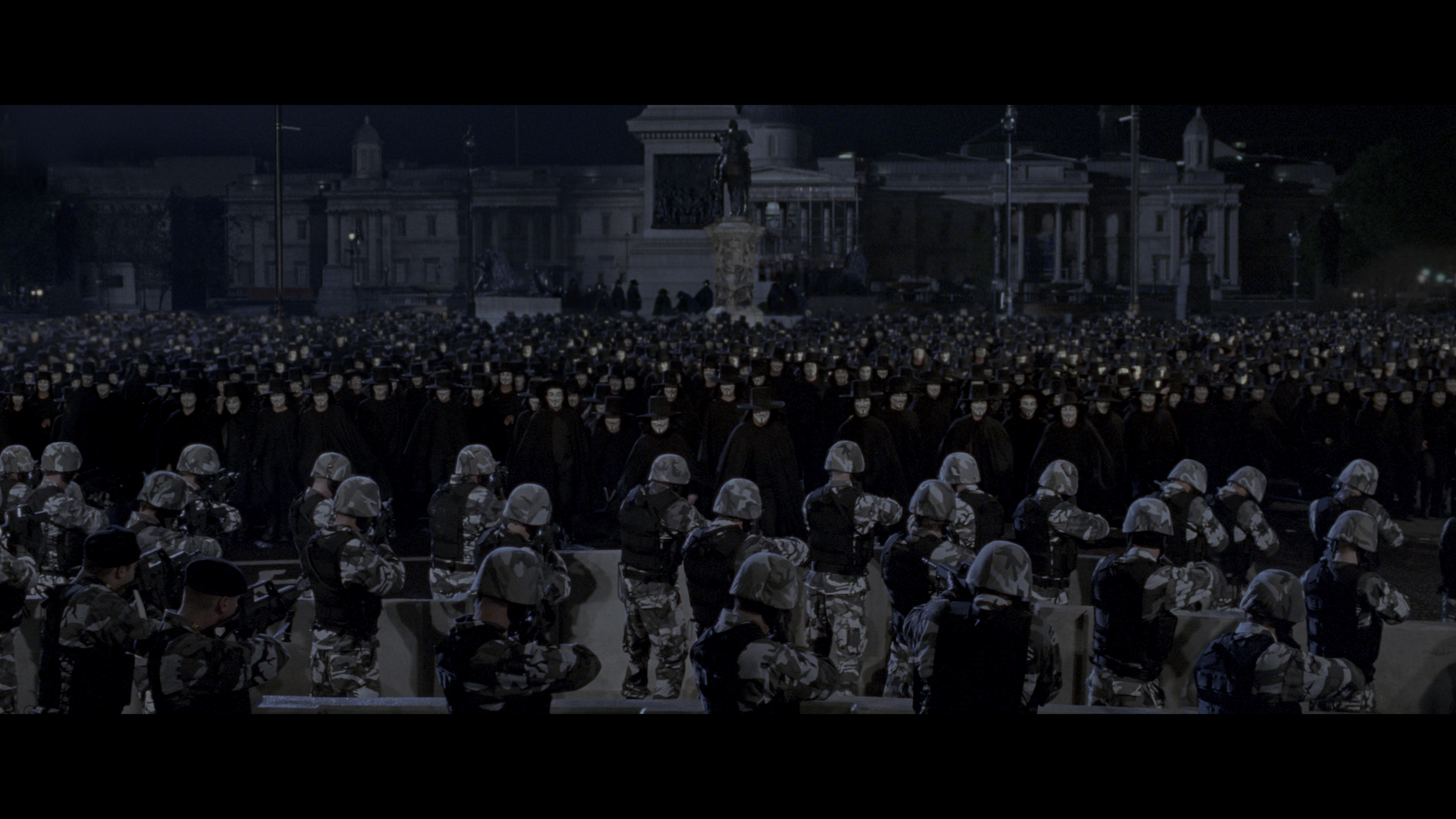
"People should not be afraid of their governments. Governments should be afraid of their people."
Performances
Hugo Weaving
Hugo Weaving gives one of the most quietly extraordinary performances in modern genre cinema, and he does it without ever showing his face. Locked behind a porcelain Guy Fawkes mask for nearly every second of screen time, he is forced to carry the entire role through cadence, posture, and the precise weight of a sentence. Yet within those constraints, V becomes startlingly alive. Weaving’s voice flickers between theatrical flourish, paternal warmth, ironic playfulness, and something closer to grief, and it is that emotional range, more than the choreography or the explosions, that makes the character impossible to dismiss as mere symbol. He is a man, a wound, and an idea all at once, and Weaving makes you feel all three.
Natalie Portman
Natalie Portman shoulders the film’s most demanding arc, because Evey is not simply rescued by V; she has to be remade by him. Portman charts that transformation with remarkable patience, beginning as a frightened, deferential young woman who has spent her entire adult life looking down, and ending as someone who can stand in the rain with her head shaved and say, without hysteria, that she is no longer afraid. The famous interrogation sequence is her finest moment: it is a performance built almost entirely on stillness, on the slow accumulation of something other than terror, and it allows the film’s central thesis about liberation to land emotionally rather than only ideologically.
Stephen Rea
As Inspector Finch, Stephen Rea provides the film’s quiet moral spine. He is a state investigator who is asked to chase V, and who gradually, painfully, begins to understand exactly what he is investigating. Rea plays him as a tired professional rather than a hero, a man whose conscience never fully went to sleep and who, by the end, is forced to choose between the comfort of obedience and the cost of seeing clearly. It is a deeply restrained performance, and the film is sharper for having him as its counterweight.
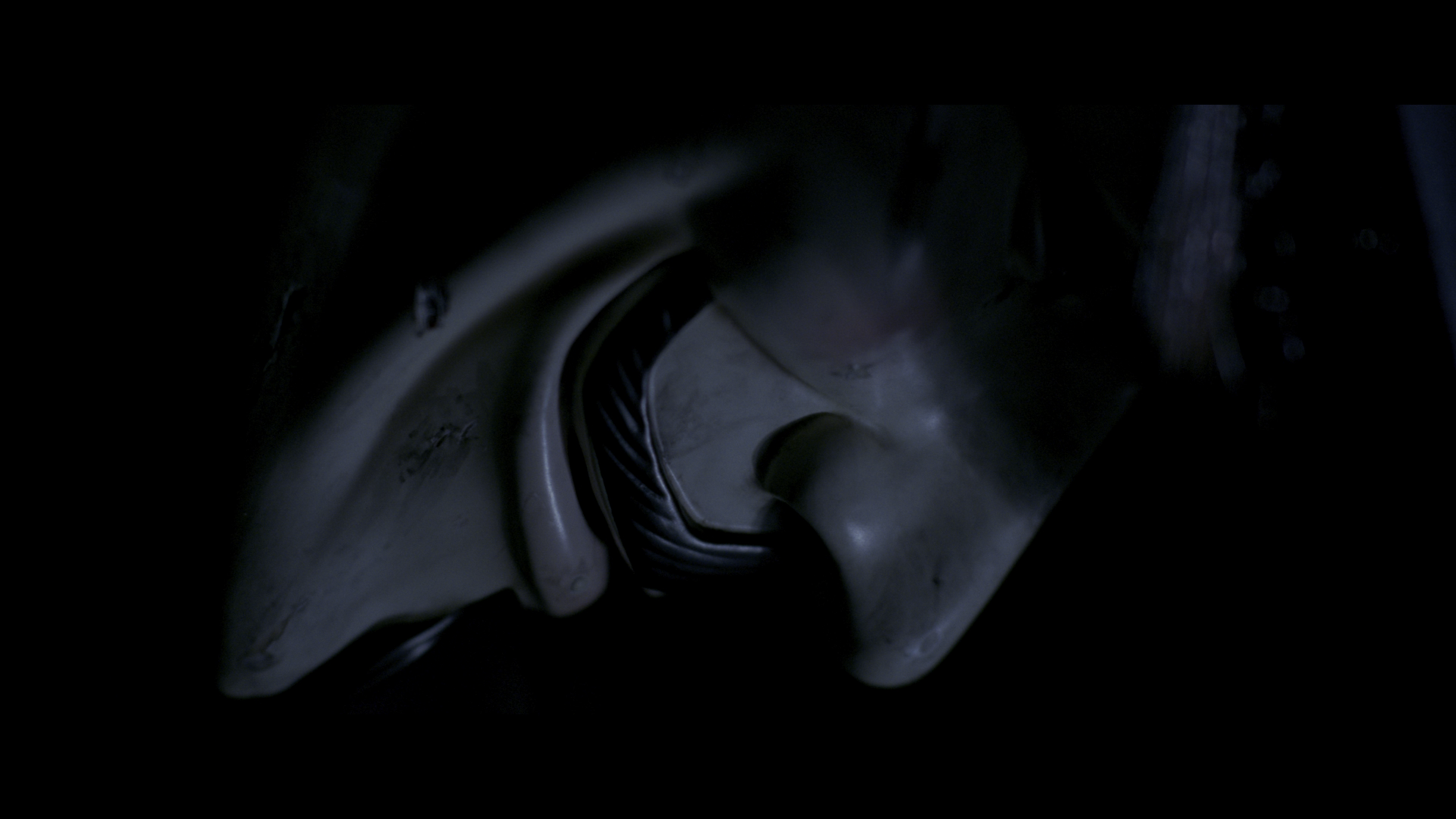
"Beneath this mask there is more than flesh. Beneath this mask there is an idea, and ideas are bulletproof."
The Narrative Arc
Adapted by the Wachowskis from Alan Moore and David Lloyd’s graphic novel, the screenplay is unusually willing to argue with itself. It is a revenge thriller and a political fable at the same time, and it never fully resolves the tension between the two; V’s personal vendetta and his public revolution are tangled together so tightly that the film keeps asking whether liberation can ever be clean. Director James McTeigue stages the story with theatrical confidence, leaning into operatic set pieces, but the most affecting passages are the smaller ones, especially the harrowing detour into Valerie’s letter, which quietly reframes the entire film as a story about ordinary people refusing to disappear. The Guy Fawkes imagery has by now slipped its leash and become a real-world protest symbol, which is itself a measure of how unusually durable the film’s central idea has proven to be: that fear is the regime’s only true currency, and that the moment a population stops paying it, the regime is already over.
Verdict
An Idea That Refuses to Stay on Screen
10/10V for Vendetta is a rare political thriller that takes its own argument seriously without forgetting to be a piece of cinema. Hugo Weaving turns a masked figure into one of the most quietly human roles of his career, and Natalie Portman gives the film its emotional gravity. Two decades on, its mood of surveillance, manufactured fear, and curated truth feels less like a warning and more like a description, which is exactly why it still cuts.